
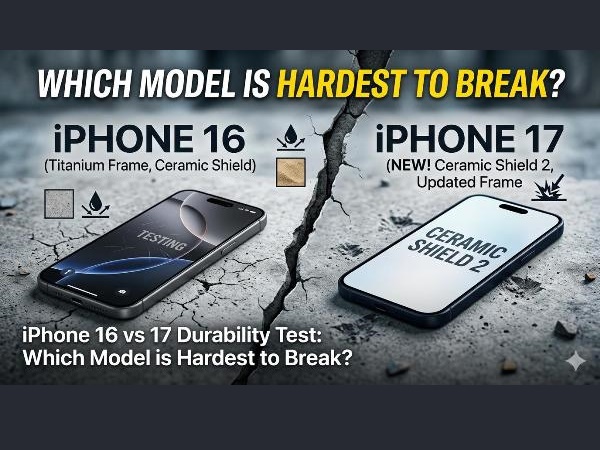
When you’re investing in a new flagship smartphone, the “survivability” factor is just as important as the camera specs or processor speed. Whether it’s a tumble onto concrete or an accidental dip in the pool, you want to know if your device can handle the real world.
With the release of the iPhone 17, Apple has introduced significant material changes, including the debut of Ceramic Shield 2 and a shift in frame materials for the Pro models. But does “newer” actually mean “tougher”? In this durability showdown, we break down the hardware differences between the iPhone 16 and the iPhone 17 to see which one is truly the hardest to break.
Key Takeaways at a Glance
| Feature | iPhone 16 Series | iPhone 17 Series | Winner |
| Display Glass | Ceramic Shield (1st Gen) | Ceramic Shield 2 | iPhone 17 |
| Scratch Resistance | Standard flagship level | 3x better scratch resistance | iPhone 17 |
| Pro Frame Material | Grade 5 Titanium | Brushed Aluminum Unibody | iPhone 16 Pro (Strength) |
| Water Resistance | IP68 (6m for 30 min) | IP68 (6m for 30 min) | Tie |
| Drop Survival | High (Industry leading) | Exceptional (Survived 20ft) | iPhone 17 |
1. The Glass Revolution: Ceramic Shield 2
The most significant durability upgrade in the iPhone 17 is the introduction of Ceramic Shield 2. While the original Ceramic Shield on the iPhone 16 was already impressively tough, Apple claims the second generation offers three times better scratch resistance.
In real-world drop tests, the iPhone 17 Pro Max has shown incredible resilience. Early Australian drop tests revealed the front glass surviving multiple impacts on hard surfaces, only finally shattering after a massive 20-foot fall. For comparison, while the iPhone 16 is a tank in its own right, it typically shows signs of stress or spiderwebbing much sooner in extreme height tests.
2. Frame Materials: Titanium vs. Aluminum
This is where the comparison gets interesting. The iPhone 16 Pro utilized Grade 5 Titanium, a material known for its incredible strength-to-weight ratio. Titanium is harder to dent and generally more “premium” in its structural integrity.
However, for the iPhone 17 Pro, Apple switched back to a brushed aluminum unibody.
- The Good: Aluminum is excellent for thermal management (keeping the phone cool) and is lighter.
- The Bad: Aluminum is softer than titanium. In drop tests, the iPhone 17 frame tends to dent and lose paint more easily than the titanium edges of the iPhone 16 Pro.
If you care about your phone’s frame looking pristine after a drop, the titanium on the 16 series might actually have the edge.
3. Water and Dust Resistance: Is There a Difference?
Both the iPhone 16 and iPhone 17 carry an IP68 rating under IEC standard 60529. This means they are rated to survive a maximum depth of 6 meters for up to 30 minutes.
While the official rating remains unchanged, the iPhone 17 likely features internal refinements. Manufacturing improvements in adhesive application and gasket precision mean the seals on a brand-new iPhone 17 may hold up slightly better against pressurized water (like a high-pressure faucet) than older models. However, remember that water resistance is not permanent and fades as the phone’s seals age.
4. Repairability: The “Hidden” Durability
Durability isn’t just about not breaking; it’s about how easy the phone is to fix if it does break.
- The iPhone 16 was praised for its “dual-entry” design, making it easier to replace the back glass.
- The iPhone 17 continues this trend but introduces a new internal layout to accommodate the A19 chip’s advanced cooling.
Early teardowns suggest that while the iPhone 17 is built “like a tank,” its tighter internal tolerances might make DIY repairs slightly more challenging for beginners compared to the iPhone 16. If you do crack that beautiful new screen, it is always best to visit a professional iPad and iPhone repair center.
5. Direct Comparison: iPhone 16 vs iPhone 17
| Apple iPhone 16 Mobile Phone$819.10Apple 4.7 (24k+) Opens in a new window | Apple – iPhone 17 256GB 6.3″ 5G Fully Unlocked, – Black$1,029.99Apple 4.7 (16k+) Opens in a new window | |
| Display Glass | Display Glass
Ceramic Shield |
Display Glass
Ceramic Shield 2 |
| Scratch Resistance | Scratch Resistance
Standard Flagship |
Scratch Resistance
3x Higher Resistance |
| Frame Material | Frame Material
Aerospace-grade Aluminum |
Frame Material
Enhanced Aluminum Unibody |
| Drop Resistance | Drop Resistance
Excellent |
Drop Resistance
Exceptional (Survived 20ft) |
| Repairability | Repairability
High (Dual-entry design) |
Repairability
Moderate (Complex internals) |
Frequently Asked Questions
Q: Does the iPhone 17 need a screen protector?
A: While Ceramic Shield 2 is 3x more scratch-resistant, it is not scratch-proof. Sand and certain minerals can still leave marks. If you want to maintain a “mint” resale value, a protector is still recommended.
Q: Is titanium on the iPhone 16 Pro better than the 17’s aluminum?
A: Purely for dent resistance, yes. Titanium is much harder. However, the aluminum on the 17 Pro is better for weight reduction and heat dissipation during heavy gaming.
Q: Will Apple repair my water-damaged iPhone 17 under warranty?
A: No. Like the iPhone 16, liquid damage is not covered under Apple’s standard one-year warranty, despite the IP68 rating.
Conclusion: The Hardest Model to Break
If your primary concern is screen breakage and scratches, the iPhone 17 is the clear winner. The leap to Ceramic Shield 2 provides a level of glass durability we haven’t seen in previous generations.
However, if you are prone to dropping your phone on its edges and hate seeing scuffs and dents, the Titanium frame of the iPhone 16 Pro might actually hold its “look” longer than the aluminum iPhone 17.
Broken your screen regardless of the model? Get a free repair quote here and let our experts restore your iPhone to factory standards.
 . Phonebulance is your one-stop centerWant to get the most out of your iPhone? At Phonebulance, we’re your one-stop center for all things smartphone! Whether you’ve cracked your screen, dropped it in water, or it’s simply acting sluggish, our certified technicians can diagnose and fix a wide range of issues. Contact us today or make an online appointment to learn more about our services and keep your smartphone connected and functioning like new!Here is the list of our smartphone repair services:
- Apple iPhone
- Apple Watch
- Apple iPad
- Apple iPod
- Samsung Galaxy S Series
- Samsung Galaxy Note Series Samsung Galaxy Tab
- Google Pixel and Nexus
- OnePlus
- Other brands (LG, Motorola, HTC, Blackberry…)
Here is the list of our repair and fixing prices:
- iPhone LCD Screen Replacement
- iPhone Charging Port Replacement
- iPhone Battery Replacement (High Capacity)
- iPad screen replacement
- iPhone Back Camera Lens Replacement
- iPhone Rear Camera Repair
- iPhone Back Glass Repair Cost
Service Areas in Orange County South:
0 Comments